Misshapes
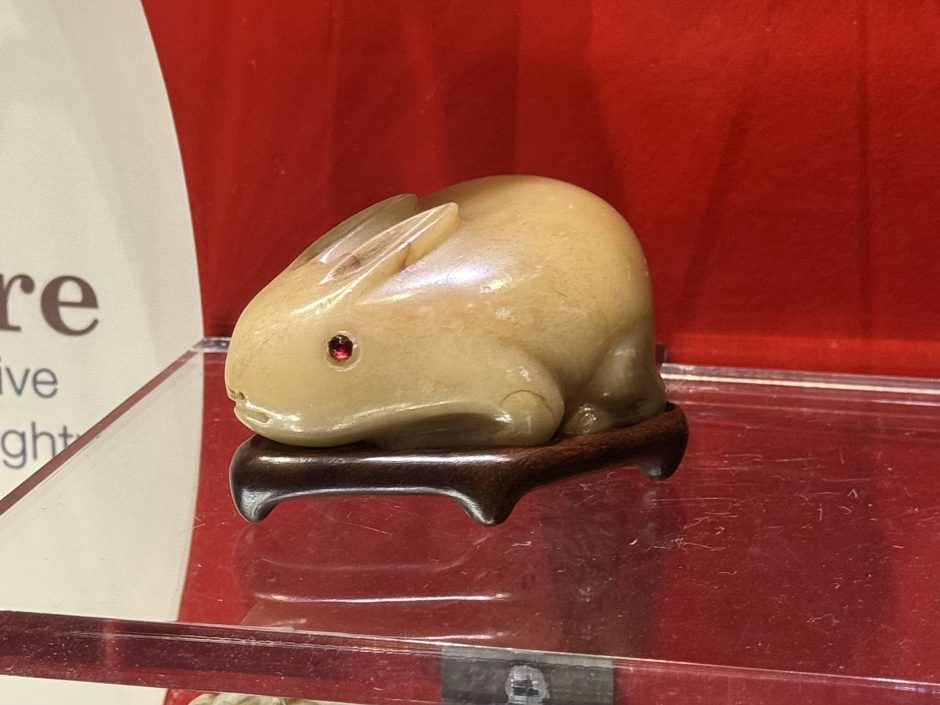
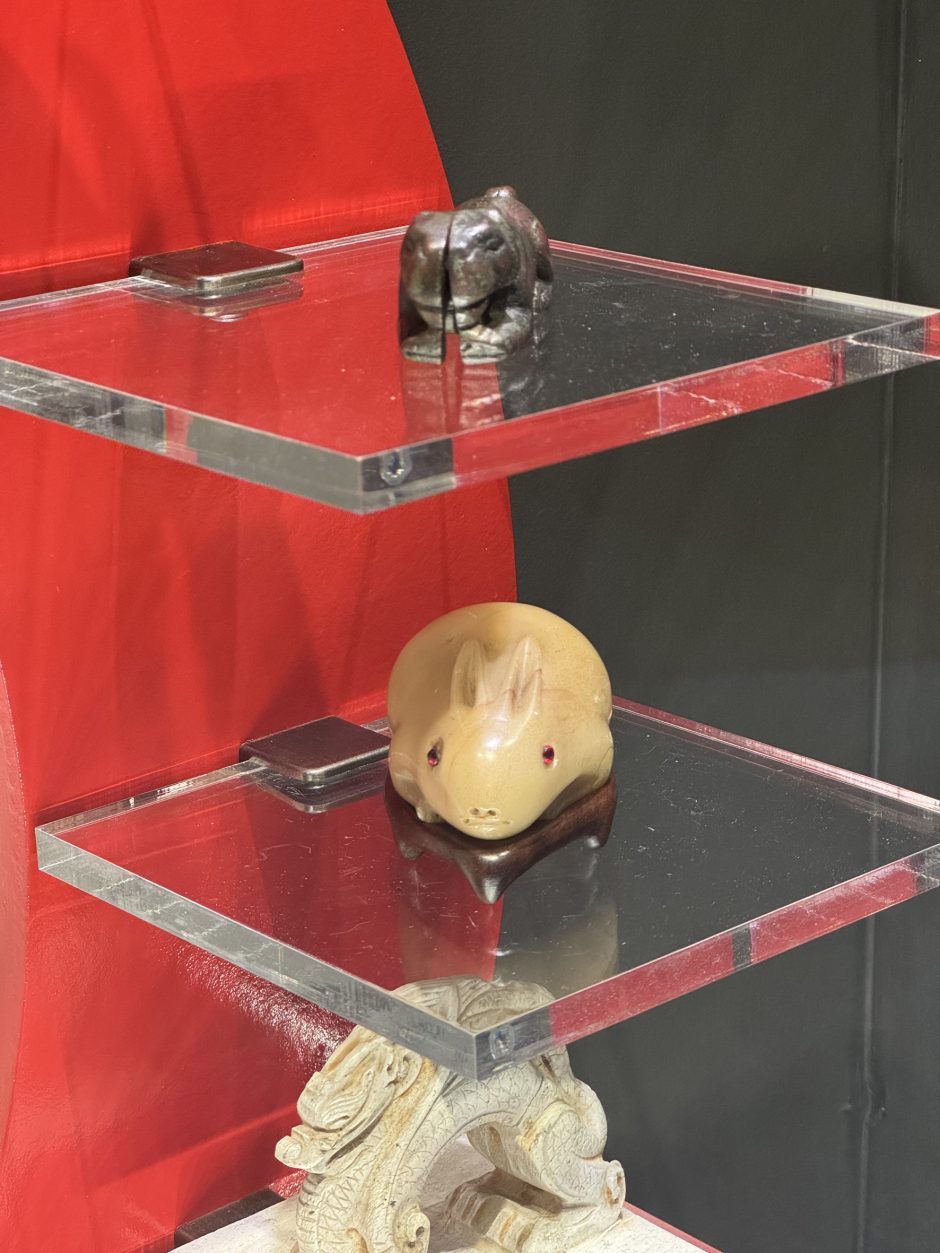
Earlier this year I visited the Oriental Museum in Durham where I saw this little gem. Here is the text on Jade and hardstone carving from beside its case.
‘Modern geologists use the term jade to refer to the minerals jadeite and nephrite. The first Chinese dictionary, written in the first century CE, describes jade (yu) as ‘a beautiful stone with five virtues – smooth, straightforward, clear-sounding, unbending and sharp’. This description can apply to many other hard stones and is often still used in this sense by Modern Chinese speakers.
Archaeological evidence suggests that hardstone carving is one of the oldest arts in China, dating back to the fifth millennium BCE. Jades and other hard stones were worked in a very similar way. While tools improved over the millennia, the basic method remained largely unchanged from Neolithic times until the development of modern diamond-tipped tools.
The stones were not carved so much as gradually worn away. This was achieved by laborious grinding of the surface of the stone with abrasives such as powdered quartz. Various grades of fineness were used to move from creating a rough shape to working the final form and polishing, tools of metal, leather, wood or felt were carriers of the abrasives rather than cutting tools.
Using this technique Chinese stoneworkers achieved incredible results, creating objects of great complexity and craftsmanship. One distinctive feature is the exploitation of varying colours, layers or inclusions in the stone. Chinese’s craftsmen excelled at creating works that could turn potential flaws into stunting features.’


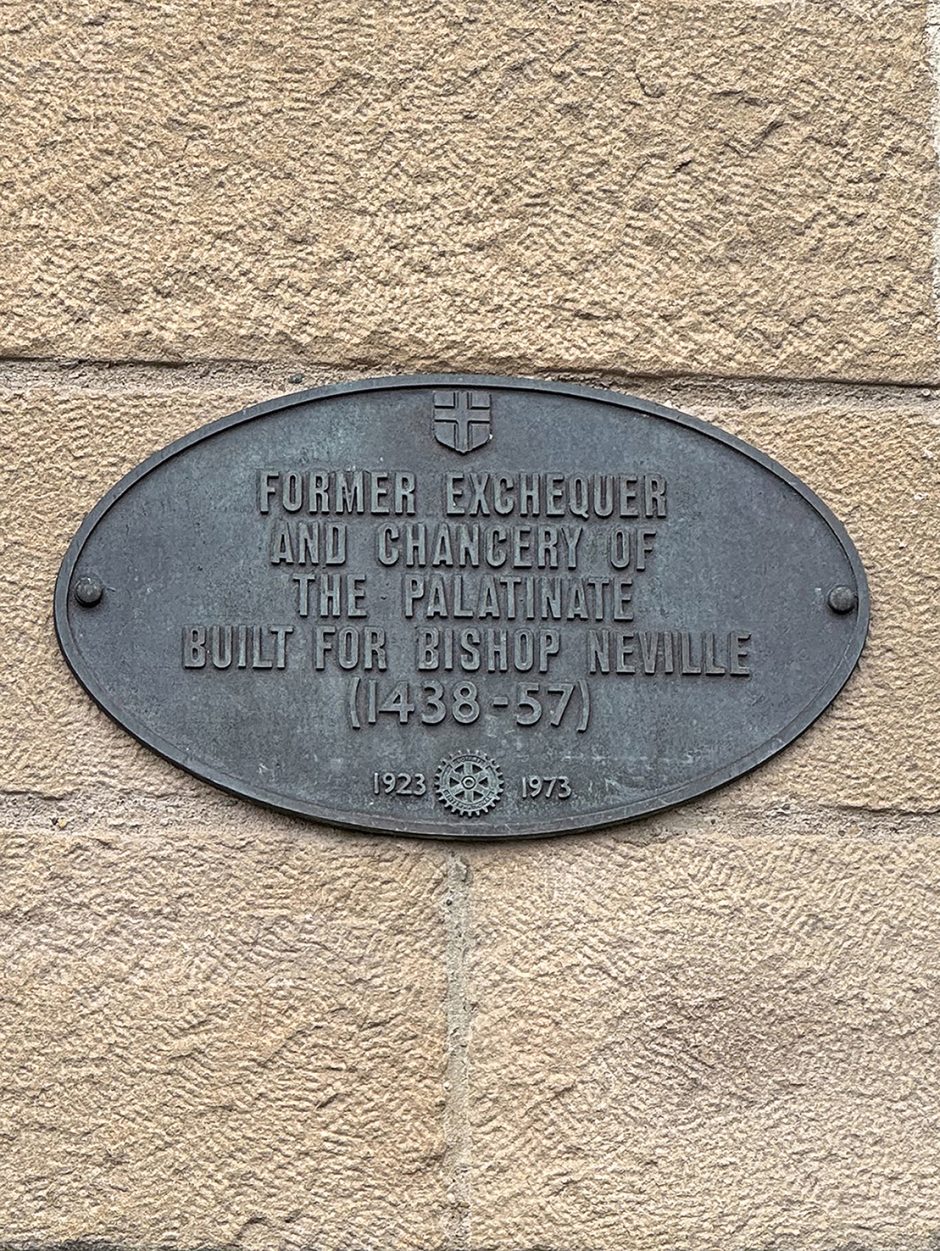
Below my second misshape, another unusual carving in Durham on the side of a building described in the plaque below – it’s near the castle .