

The Hard Stuff
This is the Rock and Spindle near St Andrews, it’s the eroded remains of a small volcano. Because the solid magma is much harder than the surrounding rocks, erosion has left this significant landmark. Image from 1887 courtesy of the University of St Andrews Library.
I’m interested in the geology of intrusive rocks because I’ve previously used whinstone in my work and I’m currently working on a proposal which may include it. Whinstone is a catch all term for dark-coloured igneous rock such as basalt or dolerite. I used it for my Trails + Tales work for Twechar in East Dunbartonshire, the block below was quarried at Croy, very near Twechar but that quarry has subsequently closed.


Whinstone is generally used for paving, setts and kerbs, but often it’s crushed and used for road metal. It’s a challenge to get hold of large pieces. Its hardness makes it difficult to work. My block was sawn, honed and the raised lettering had its background sandblasted away. On Mohs’ hardness scale it is between 6 and 8.
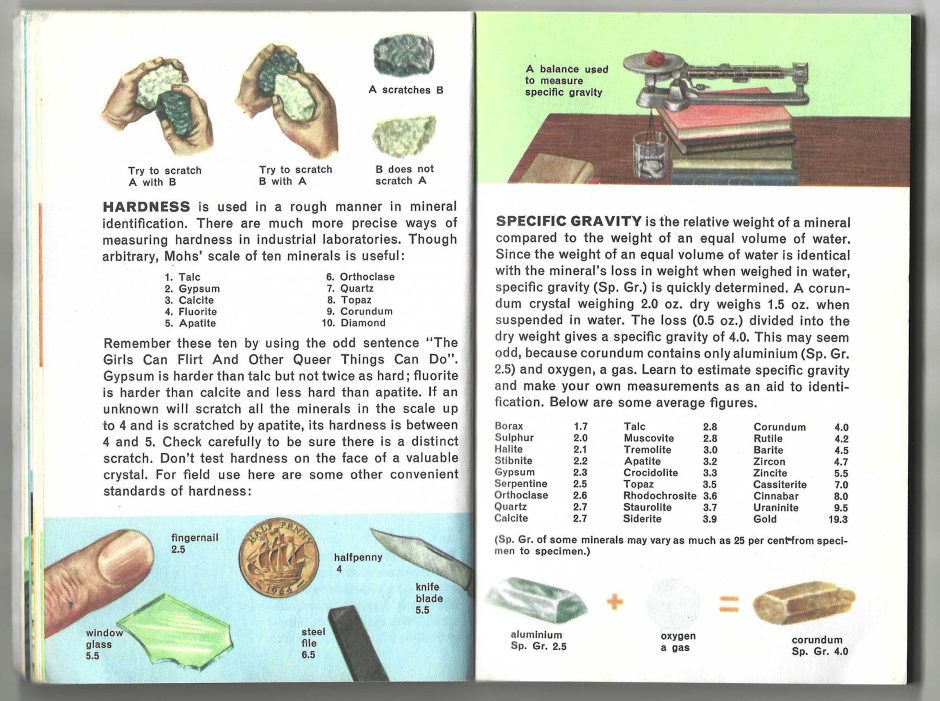
An interesting mnemonic above The Girls Can Flirt And Other Queer Things Can Do from a book from my childhood!

In the central belt an area of continuous sub-surface magma may never have been linked to a volcano. This is the case with the Lomond and Cleish Hills which are above a complex of volcanic rocks, known as the Midland Valley Sill, extending across much of Fife.

My supplier now gets whinstone from near Shotts, which you can see above is on the southern edge of the Midland Valley Sill-complex. I’ll need to see what they have, it’s a lot better for the environment to use this indigenous material than import granite from abroad.


